
 By Brew Bennett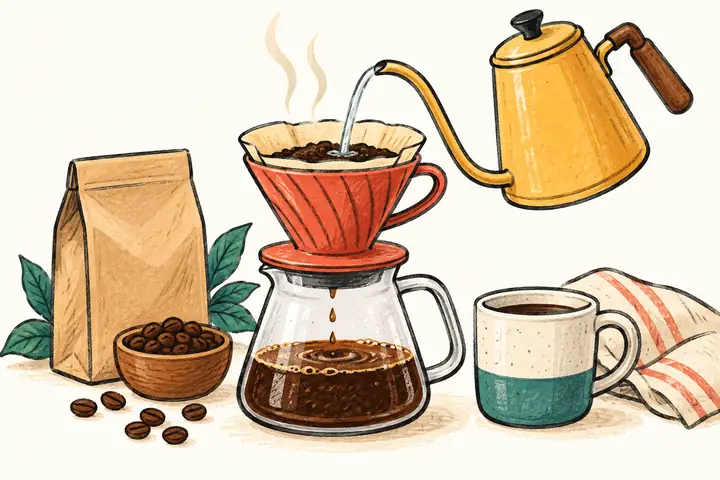
There are plenty of ways to brew coffee, but pour-over is a good place to learn the basics. You can watch the water meet the grounds, get a feel for the pace of your pour and taste what changes when you grind a little finer or coarser.
Keep it relaxed. Think of it as a small morning routine with room for adjustments: the same amount of coffee, the same amount of water, the same filter, then one small change if the cup tastes too bitter, flat or sharp.
Here is a simple method and six respected coffee websites to help you explore ratios, water temperature, filters, grind size and brewing technique.

Start with the basics
A simple home recipe is 15 grams of coffee to 240-250 grams of water. That is roughly a 1:16 ratio, giving you a pleasant cup that is easy to repeat and adjust. For a stronger cup, use a little more coffee. For a lighter one, use a little more water.
Use freshly ground coffee when you can. A burr grinder produces more even particles than a blade grinder, and grinding just before brewing helps preserve freshness. Start with a medium grind, roughly like coarse sand or kosher salt, and let the taste guide your adjustments.
Water around 90-96°C is a useful starting range for pour-over. Without a temperature-controlled kettle, boil the water and let it sit briefly while you rinse the filter and weigh the coffee.
A relaxed pour-over recipe
- Rinse the filter. Place it in the brewer, pour hot water through it and discard the rinse water. This warms the equipment and removes papery flavours.
- Weigh the coffee and water. Start with 15 g of coffee and 240-250 g of water. Make a note of the ratio when you brew a cup you like.
- Bloom the coffee. Pour about 30-45 g of water over the grounds and wait 30-45 seconds. This helps release trapped gases and makes the coffee bed easier to wet evenly.
- Pour steadily. Continue in small circles from the centre outwards. Keep the stream gentle and avoid splashing hard into the filter.
- Let it finish draining. A total brew time of about 2.5-4 minutes is a useful guide. Taste the coffee before deciding what to change.
Taste and adjust
The best coffee tip is almost boring: change only one thing at a time. If the coffee tastes bitter, dry or harsh, try a slightly coarser grind or a shorter brew next time. If it tastes thin, sour or watery, try a slightly finer grind or a slower pour.
When the cup is close to what you like, a small adjustment can be enough. Move the grinder one small step, keep the ratio steady and brew again. A recipe you can repeat makes it much easier to understand what affects the taste.
A good cup can be simple. It can taste clean, pleasant and balanced, and be something you look forward to making again tomorrow.

Six great websites for better coffee
These are six places I would save in a coffee bookmarks folder. They are well known in the coffee world and offer useful standards, recipes and practical advice to explore beyond this short guide.
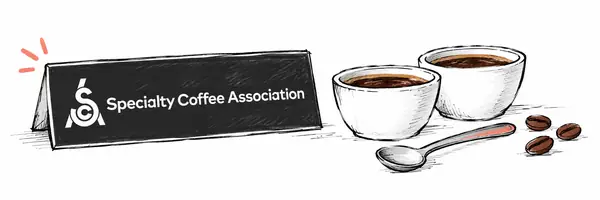

Start with NCA or Hario when you are ready to brew. Visit SCA to explore the standards behind good coffee. Save Blue Bottle, Stumptown and Counter Culture for days when you want to compare methods and find your own morning rhythm.
A few coffee questions
What is an easy recipe for a good cup of pour-over coffee?
Start with 15 grams of coffee and 240-250 grams of water. Use a medium grind, rinse the filter, bloom the coffee for 30-45 seconds, then pour the remaining water steadily. Aim for a total brew time of about 2.5-4 minutes.
Why does my coffee taste bitter?
Bitterness can come from grinding too finely, brewing too long or extracting too much. Try a slightly coarser grind, a gentler pour or a little less contact time.
Do I need a scale to brew coffee?
A scale makes a good cup easier to repeat. You do not need expensive equipment, but weighing your coffee and water removes much of the guesswork.
